Virtual Backgrounds
The virtual backgrounds raise awareness about the diversity of the Californians that we serve, including important cultural celebrations and historical events with great impact. Please click the “Download Background” button to ensure it is the correct size and format.
Featured Background(s) for September
- National Latino Heritage Month
- Labor Day (September 7)
- International Literacy Day (September 8)
- International Day of Peace (September 21)
- International Day of Sign Languages (September 23)
- Native American Day (California) (September 25)
For additional virtual backgrounds visit the Archive.
For the 2026 Diversity and Inclusion calendar click here.
National Latino Heritage Month


Observed annually from September 15 through October 15, National Latino Heritage Month celebrates the histories, cultures and contributions of people whose heritage traces to Spain, Mexico, the Caribbean, and Central and South America. The observance begins on September 15 to coincide with the independence anniversaries of several Latin American countries.
Latino communities have played a foundational role in shaping California since before statehood. California’s first Constitution, adopted in 1849, was written in both English and Spanish. This reflects the longstanding influence of Latino communities on the state’s history and development.
Today, California is home to more than 15 million Latinos, representing approximately 40% of the state’s population. Latino Californians continue to strengthen our communities through leadership, public service, education, business, agriculture, science, the arts, healthcare and countless other fields.
As we celebrate National Latino Heritage Month, we recognize the diverse histories, cultures, and traditions that enrich California while honoring the lasting contributions of Latino communities to our state’s past, present and future. The observance also provides an opportunity to learn from one another, appreciate the diversity of Latino experiences, and reaffirm our commitment to building inclusive workplaces where everyone can belong and thrive.
Resources:
- Governor Newsom proclaims Latino Heritage Month | 2025
- Latino Facts in California| UCLA
- Preserve Latino History | CA State Parks
Labor Day (September 7)


Observed on the first Monday in September, Labor Day honors the contributions and achievements of workers across the United States. The holiday grew out of the labor movement of the late 19th century and became a federal holiday in 1894.
The labor movement helped shape many workplace protections and standards that are familiar today, including the minimum wage protections, workplace safety standards and other advancements in working conditions and employee rights.
California’s workforce reflects the extraordinary diversity of our state, with millions of people contributing their skills, knowledge and service across industries and communities. From agriculture and healthcare to education, technology, public service, and countless other fields, workers have played an essential role in California’s history, economy and continued growth.
As we recognize Labor Day, we honor the generations of workers whose efforts helped shape the workplaces we know today and recognize the contributions of those who continue to serve our communities. The observance also provides an opportunity to reflect on the importance of workplaces where people are treated with dignity and respect and have meaningful opportunities to contribute and thrive.
Resources:
- Governor Newsom Issues Proclamation Declaring Labor Day | 2019
- Labor Day History | Department of Labor
- California History Labor Movement | Smithsonian
International Literacy Day (September 8)

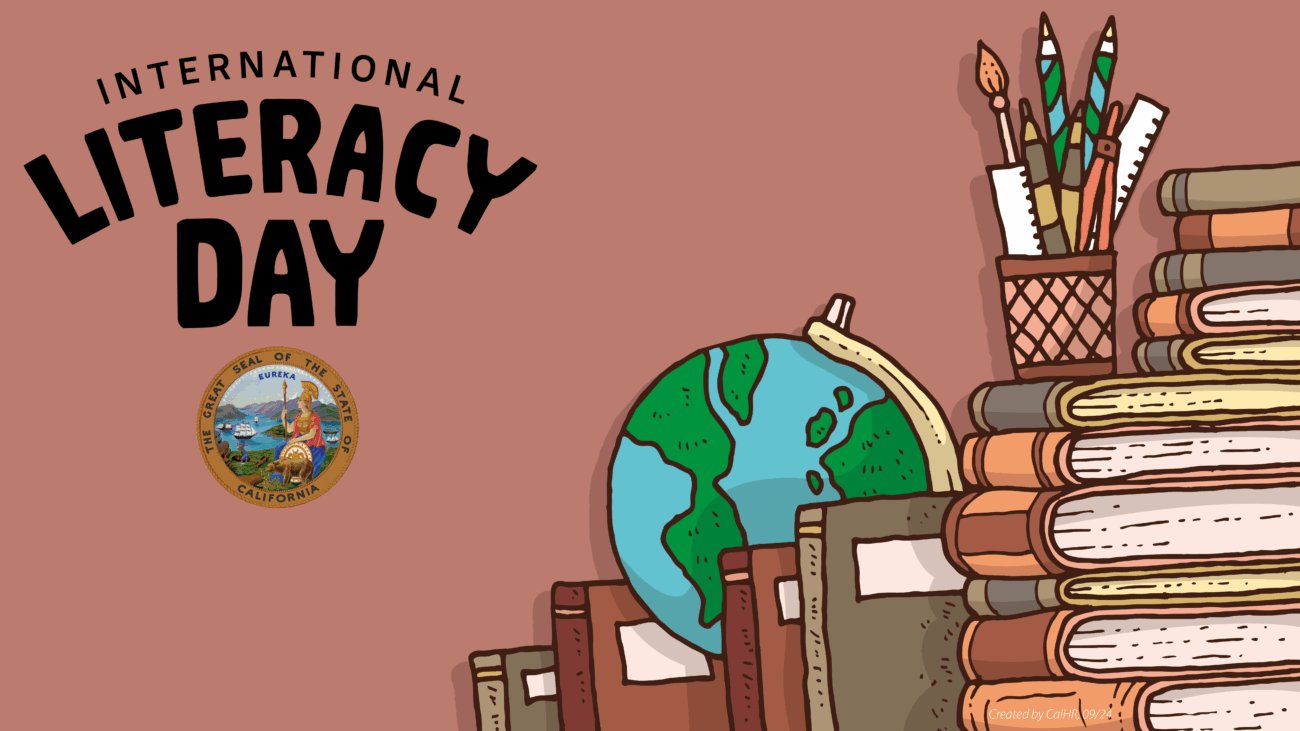
Each year on September 8, International Literacy Day recognizes literacy as a foundation for learning, opportunity and participation in our communities. Literacy extends beyond the ability to read and write—it also includes being able to find, understand, and use the information we encounter in everyday life.
Across California, educators, libraries, community organizations, authors and advocates help expand access to books, tutoring, language learning and other resources that support literacy and lifelong learning. In a state as linguistically and culturally diverse as California, making information accessible and understandable is especially important.
That is also why plain language matters. Whether someone is reading a public health notice, completing a benefits application, reviewing workplace information or navigating government services, clear and understandable communication helps people find what they need, understand their options and make informed decisions.
As we recognize International Literacy Day, we celebrate those working to expand literacy and learning while encouraging all of us to consider how the way we communicate can help remove barriers, increase access to information and ensure more people can fully participate in our workplaces and communities.
Resources for International Literacy Day:
International Day of Peace (September 21)

The International Day of Peace is observed every year on September 21. The Day reaffirms our individual roles in promoting a culture of peace through understanding, tolerance and dialogue rather than violence to resolve our differences.
From schools to neighborhoods to workplaces, California is known for its diversity and history for championing equity and standing up for one another. In California, diversity shapes who we are. We take pride in our long-standing commitment to equity and in showing up for one another—in our schools, neighborhoods and workplaces.
We celebrate International Day of Peace by taking a moment to reflect. How do we practice peace in our daily lives? We start by listening with empathy and connecting across cultures to find common ground.
Resources for International Day of Peace:
International Day of Sign Languages (September 23)


Each year on September 23, International Day of Sign Languages recognizes the importance of sign languages and promotes the linguistic rights of Deaf people around the world. Established by the United Nations, the observance takes place during the International Week of Deaf People and celebrates the diversity of Deaf communities, cultures, and languages.
There are hundreds of different sign languages used around the world, each with its own grammar, structure, and cultural significance. In the United States, American Sign Language (ASL) is widely used by Deaf and hard-of-hearing people and is an important part of Deaf culture and community.
California continues to expand access to communication for Deaf and hard-of-hearing Californians through ASL interpretation, captioning, accessible technology, and other communication supports. These resources help ensure people can access public services, participate in the workplace and engage fully in their communities.
As we recognize International Day of Sign Languages, we celebrate the languages, cultures, and contributions of Deaf communities while recognizing that accessible communication benefits everyone. In our workplaces, practices such as providing interpreters and captions, using accessible technology, and considering different communication needs can help remove barriers and create environments where everyone has meaningful access to information and opportunities to participate.
Resources
Native American Day (California) (September 25)


Observed on the fourth Friday of September, California Native American Day recognizes the cultures, histories, achievements, and enduring contributions of California Native peoples. It is an opportunity to celebrate Native communities, acknowledge the historical harms experienced by Native peoples and honor the resilience, traditions, and knowledge they have protected across generations.
California is home to more than 100 federally recognized Tribal Nations, each with its own distinct history, culture, languages, traditions, and government. Native peoples have called California home since time immemorial and continue to shape our state through Tribal leadership, cultural preservation, environmental stewardship, education, public service, and community advocacy.
California has also taken steps to acknowledge historical harms and strengthen partnerships with Tribal Nations. In 2019, the state issued a formal apology to California Native peoples and established the California Truth & Healing Council. More recently, California advanced the return of 136 acres at Blues Beach in Mendocino County to Tribal stewardship, recognizing the cultural, historical, and ecological significance of the ancestral land. As we recognize Native American Day, we honor the sovereignty and contributions of California Native peoples while continuing to learn from the histories and living cultures that remain foundational to our state.
Resources
- Governor’s Office of Tribal Affairs
- California Native American Heritage Commission
- California Truth & Healing Council
- Governor of California: Native American Day Proclamation
- California Advances Return of Blues Beach to Tribal Stewardship
- California State Parks: Tribal Memoranda of Understanding Program
Stay In Touch
The DEIA Toolkit sends monthly emails to update you on the latest virtual backgrounds and the newest resources we’ve published.
Subscribe to our distribution list to ensure you never miss an announcement.
The resources provided on this website are meant to educate the user on various DEIA-related topics; they are not to be interpreted as a directive from or policy of the California Department of Human Resources (CalHR). Always consult with your department’s leadership, human resource office, and/or in-house counsel before adopting any of the ideas expressed on this website. Many resources link to third-party websites that are not under the control of CalHR. CalHR is not responsible for the contents of any third-party sites, links in third-party sites, or any changes or updates to third-party sites.